
Fractals and Strange Attractors: While Dr. Freud thinks of himself as a scientist, he might not be aware of a phenomenon and related concept that comes from one of the interdisciplinary fields that have gained prominence in recent years. The field concerns the study of complex systems (Miller and Page, 2007), the concept concerns patterning in nature (fractals) (Briggs and Peat, 1989), and the related phenomenon is called “strange attractor” (Gleick, 1987; Lorenz,1995). As some complexity scientists would suggest, “Mother Nature” often appears to be quite lazy. She will discover that a specific structure or design is operating quite successfully in nature and will then replicate this structure or design repeatedly in a specific natural object.
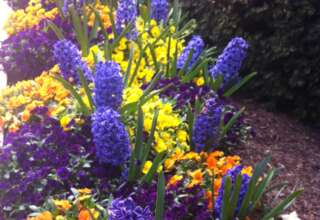
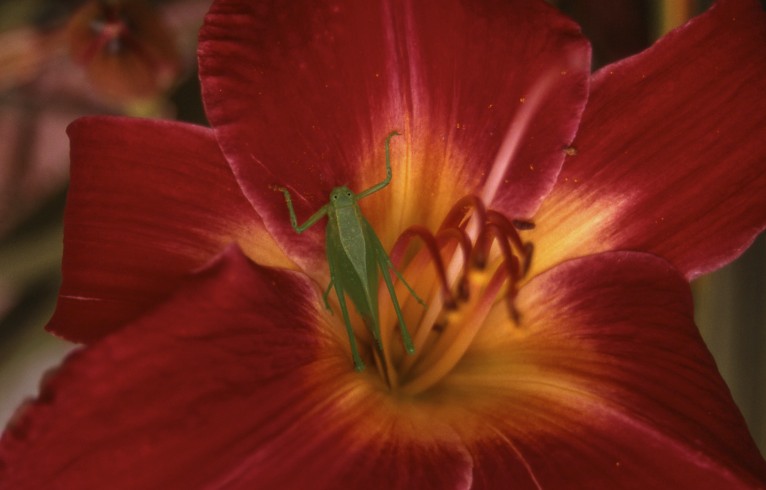
These replicating fractals are found in coniferous trees, where the structure of the needle is replicated in the branch of the tree and even in the structure of the entire tree. We find similar patterning in the branching of waterways and blossoming of flowers. Perhaps, fractals also operate in human behavior. Like Mother Nature, we might be a bit lazy and simply replicate behavior patterns that were successful for us early in life (such as the way we interact with someone in authority) throughout the rest of our life. Psychoanalysts identify this as transference; we can become complexity scientists and refer to these repeated behavior patterns as “human fractals.” Dr. Freud seems to be aware at some level of this push toward patterning when asking Daniel to reflect on thoughts, feelings and behaviors that seem to be recurrent in his life.
Fractals are particularly common in complex systems, where many different and closely interrelated functions are in operation. As Mother Nature suggests, it is expeditious to design these functions such that they operate in a very similar manner (thereby making multiple functions that much easier to coordinate). Something particularly intriguing is operating that makes replication much more likely. Specific structures and designs (patterns) that have been successfully operating in one system actually attract the creation of similar structures and designs in neighboring systems. We see this operating simply when we begin to tap our foot when hearing music emanating from a nearby building or a street band playing in front of our home. Complexity researchers suggest that a “strange attractor” is in operation when our foot taps or, even more impressively, when we are improvising a beat and a tune when playing in that jazz band at our local club.
Nonhuman examples of strange attractors include the avalanche, which recruits snow, rocks and debris from the neighboring snow-covered slopes down which it is careening, or the notorious pothole, which attracts neighboring sand, crumbling asphalt and related debris that expands the size of the pothole and make subsequent sealing of the pothole very difficult (the edges of the former pothole where the new asphalt meets the old asphalt becoming strange attractors once again for sand, crumbling asphalt and debris).
Returning to human affairs, we may be seeing our favorite, existing thoughts, feelings and behaviors “strangely” attracting new thoughts, feelings and behaviors that closely resemble these old ones. Our avalanche of fears precipitated by one threatening experience in our current life begins to recruit old fearful memories, childhood beliefs that we are powerless to defend ourselves, and patterns of withdrawal from a threatening world in which we are helpless.