
Similarly, in the world of Krishnamurti, we are likely to find that a life filled with talk about experiences, memories of past experiences, and articulation of experiences hoped for or expected in the future is actually quite hollow. It also is a life that is protected and isolated from the experiencing of relationships. We live within what Kevin Weitz and I have called a “bubble of belief” (Weitz and Bergquist, 2024). In alignment with Argyris and Schön’s views, this bubble would be saturated with self-fulfilling assumptions. These assumptions would never be tested in the real world, nor would the “true believer” (Hoffer, 1951) spend much time listening to people who live in differing bubbles-of-belief.” Without direct experiencing of one’s world, there are only thoughts and assumptions about this experiencing, leaving one comfortably living in a constructed world rather than in a world that is always filled with surprises, new learning and the growth of self.
Experience vs. the Past and Future
As noted by Krishnamurti, it might be advisable when engaged in personal coaching to focus on one’s current experiencing rather than either one’s past or one’s future. This is the perspective that Sonya took when first meeting with Katherine. Throughout his writing in Commentaries on Living, Krishnamurti (1956) shares exceptionally beautiful experiencing that is being engaged by other people in his life. I have already proposed that exceptional experiencing that breaks the barrier between one’s inner self and the external world might be found when encountering Awe (Keltner) or engaged in an activity that produces Flow (Csikszentmihalyi).
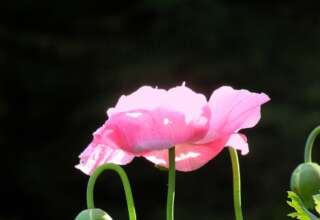
Beauty might provide entrance to our inner journey. They could be the on ramps to our psychic freeway. As the author of the Celestine Prophecy (Redfield, 2018) noted, there are moments when something scintillating appears before us. This thing or event of sparkling beauty seems to be connected to something deep within us. Much like Carl Jung (1931), James Redfield speaks of these “minor miracles” as Synchronistic. The sensitivity associated with this experiencing might be based on what George Klein (1967) identifies as the appearance of peremptory ideations.
In essence, Klein is suggesting that we often have a train filled with images, emotions, and expectations (ideations) that runs through our unconscious mind. This train, like an avalanche that is coursing down a mountain side, picks up additional ideations as it courses through our psyche. While the ideational train can pick up fears and apprehensions arising from our confrontation with threatening people or events, it can also pick up moments when we are experiencing something beautiful. The synergy involves a temporary joining together, within the experiencing, of the outside object or event of beauty and the inside ideational train that is filled with many memories, feelings, and expectations. “Sparks fly” and we find ourselves experiencing something that is not only “breath-taking” but also rich with insights regarding our authentic self.
Dacher Keltner (2023) has recently written about this kind of experience in his book about Awe. He identifies the wonder to be found in music and in visual designs (such as those found in the terracotta warriors in China). Awe is found in what Durkheim (1912/2008) described as collective effervescence, which is the emotional core of religion. This effervescence is evident in the “buzzing and crackling with some life force that merges people into a collective self, a tribe, an oceanic ‘we.’” (Keltner, 2023, p. 13). Awe is also evident in spiritual and religious texts. And in stories of life and death. These texts and stories “lead us to epiphanies—when we suddenly understand essential truths about life.” (Keltner, 2023, p. 17)