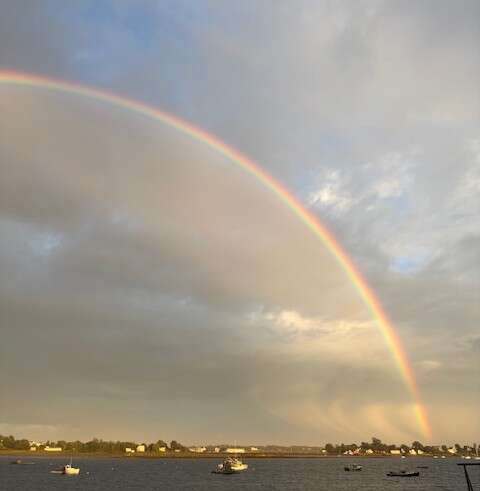
The moments of experiencing identified by Krishnamurti and the state described by Keltner contain not only Awe and Wonder. These moments and state also contain what Mihali Csikszentmihalyi (1990) identifies as Flow. While Awe tends to be a passive experience with powerful forces being observed and absorbed in a psychic storm, Flow tends to be an active experience, with power residing in one’s engagements existing at the threshold between boredom and anxiety. When Flow and Awe join forces, one may find the kind of openness, questioning, curiosity, and mystery that Krishnamurti and Keltner have described.
Building on the work of Victor Turner (1977), Csikszentmihalyi (1990) identifies temporary settings—and moments of experiencing–that provide a unique threshold between boredom (lack of challenge) and anxiety (too much challenge). He identified this threshold experience as “Flow.” He suggests that flow can be found in the many enthralling moments we have all experienced as rock climbers, jazz musicians, or chess players. Sonya might have experienced a bit of flow when working with Katherine on her proposal, this experience of flow residing in her teaching and mentoring (challenging) rather than her work on rewriting the proposal (boring).
We can even experience a “micro-flow” when twirling a pencil or paper clip in our hand during a particularly boring meeting. Keltner (2023, p. 25) speaks of something similar when he notes that in our daily life we frequently “feel awe in encounters with moral beauty and . . . in nature and in experiences with music, art and film.” We have “fun.” Keltner considers this a “self-transcendent” state in which we feel truly free. In what could be labeled a state of “micro-awe,” we are transported “out of our self-focused, threat-oriented, and status quo mindset to a realm where we connect to something bigger than the self.” (Keltner, 2023, p. 28)
Before fully absorbing and even applauding this highly personalized vision of human growth, it is important to acknowledge that at some important level, this vision is quite conservative and individualistic. As Sonya noted in conveying one of Krishnamurti’s favorite stories during her first session with Katherine, the perspective being offered is focused on immediate, personal experiencing rather than any future-oriented collective efforts to reform the society in which we are now living. There is a tendency toward acceptance of the world as it now exists, versus a striving for reform and improvement of the human condition. This is the dilemma inherent in Eastern thought. One remains in a Yuga posture while the world around the contemplative person is “going to hell.” One retreats from the world when it gets too messy or one devotes their time to healing the wounded rather than seeking to prevent the wounding.
There is no compelling image of the future in the writing of Krishnamurti or in the writing of many other spiritual leaders. There is just a focus on the “now.” We are invited to relate to some higher order being or cause, rather than relating to members of our own community. Attention is given to Being rather than Becoming at a personal and collective level. While a focus on the “here-and-now” for one’s client is very appropriate when someone like Sonya is providing personal coaching, it is also important to encourage rather than block aspirations of one’s client to seek future improvement their organization or community.