
Sick Soul and Limbo
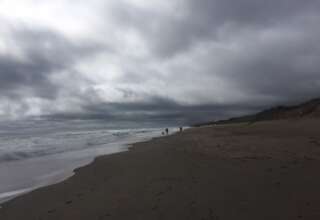
A dyadic perspective is directed toward the tension that exists in the life of the person who is not yet twice born—and may never be. This person might be described as someone with a “Sick Soul”. They remain in a state of limbo, having not found, as the twice born has, a resolving new direction in which to move. It is while floating on the dark but quiet sea of Limbo that we recognize neither the shore from which we embarked nor the shore to which we hope to arrive at some point in the near future.
This is the state of near nothingness that Jean Sibelius so vividly but somberly portrayed in his Swan of Tuonela. Everything is still and motionless. We either feel nothing or fill a diffuse anxiety regarding nothing that we can specifically identify. And then we begin to move and find that the old tensions we sought to escape are with us again—tormenting us, laughing at us, causing us to lose sleep and lose hope. We remain adrift.
This image of Limbo comes close to capturing something of the existential despair offered by Kierkegaard (1980), as well as the often stifling and confining world of Melanie Kiein and other object relations theorist who write about the inner life of children and adults (Greenberg and Mitchell, 1983). We are all living with many psychic “objects” inside our head and heart that represent important external people and events in distorted form, be they both the “good” and “bad” mother, the ”protective” and “remote” father, the “supportive” and “teasing” older sibling, the cliff from which we will fall or the God who will always be there to protect us from the hovering demons.
We seek to resolve these psychic tensions, but to no avail. We cast off our boat to escape the tensions, but find us adrift in a void, a nothingness, a sea with unknown depth. It is the Limbo of nothingness that seems to be an inevitable outcome when facing unresolved psychic tensions. It is a Limbo in which we discover and are forced to live with a “sick soul.” Carl Jung’s (2009) Red Book documented in exceptional fashion, his excursion into the tension-filled domain of the unconscious. I offer excerpts from this remarkable product of Jung’s “creative madness” as he ventures onto the sea in search of the shore where he can realign with his soul:
“My soul, where are you? Do you hear me? I speak, I call you—are you there? I have returned,
I am here again… Life has led me back to you. Let us thank the life I have lived for all the happy and all the sad hours… My soul, my journey should continue with you. I will wander with you and ascend to my solitude.
Every step closer to my soul excites the scornful laughter of my devils, those cowardly ear-whisperers and poison-mixers.
You open the gates of the soul to let the dark flood of chaos flow into your order and meaning. If you marry the ordered to the chaos you produce the divine child, the supreme meaning beyond meaning and meaninglessness.
The supreme meaning is not a meaning and not an absurdity, it is image and force in one, magnificence and force together.
Be silent and listen: have you recognized your madness and do you admit it? Have you noticed that all your foundations are completely mired in madness? Madness is not to be despised and not to be feared, but instead you should give it life… Be glad that you can recognize it, for you will thus avoid becoming its victim.”