As Fromm persuasively documented, we are strongly inclined to escape from freedom. We stay home and align ourself with a comfortable, but constraining, authoritarian regime (Fromm, 1941). We are “rewarded” with the opportunity to consume goods (Fromm, 1955). Now, in the mid-21st Century, we chose to align easily and passionately with the alternative realities and conspiracies that populate our media—and particularly our digital media (Weitz and Bergquist, 2024).
Yet, with all the opportunity to escape from freedom, it is in freedom that we find the opportunity to no longer wait, nor continue to envision the states of imagination, anticipation, creativity and achievement that I explored in the previous essay (Bergquist, 2026b). We leave our seat where we have been waiting for Godot and begin freeing David from the non-perfect block of marble. We embark on the journey to some unknown site of initial nothingness, following our own drinking gourd. We require courage and a strong dose of maturity when engaging an interplay between nothingness and something. The outcome of this courageous, thoughtful, reflective and “out of the box” creativity is worth it all. For we have created something that from many perspectives and using many criteria is Beautiful.
Beauty as a Journey from Nothingness
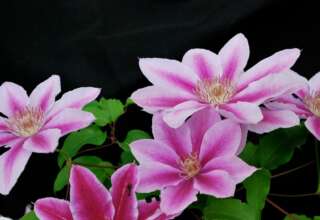
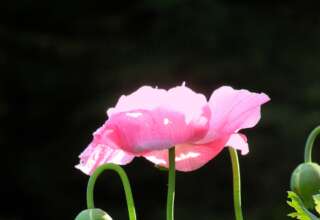
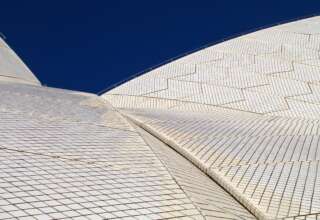
It seems that the embrace of Freedom is not always subject to careful inspection. As Berdyaev (1965, p. 168) has suggested, Beauty is purposefulness without presentation of the purpose. It is a desired outcome of any creative process yet is not easily described prior to its presence. Neither are the criterion to identify what is Beautiful. This state and outcome can’t be readily captured or quantified. Perhaps the most we can say is that Beauty is transcendent (Berdyaev, pp. 319-321)
“Beauty is a characteristic of a higher qualitative condition of being, of a higher attainment of existence, rather than a separate phase of existence. We may say that beauty is not only an aesthetic category, but a meta-physical category, as well. If man receives anything into himself integrally, it is beauty. We say what a beautiful spirit, a beautiful life, a beautiful action, etc. This is not only an aesthetic evaluation, it is integral evaluation. Everything harmonic in our life is beauty. Beauty is the final purpose of human life and the life of the world. Good is a means, a way, and it arose in opposition to evil (the knowledge of good and evil). Beauty lies beyond the knowledge of good and evil. But that good which lies beyond the distinction between good and evil, where evil is forgotten, is also beauty. . .”
For Berdyaev, beauty is always the outcome of a journey from nothingness, through chaos, to some full appreciation of the “something” in which we are now living. This appreciation is not a simple act of acknowledgement. It is a creative, subjective act–a “going beyond the information given”, as Dr. Bruner (1973) would put it. According to Berdyaev (1965, pp. 320-321):
“Our intuitive appreciation of the beauty of nature, of a person, of a work of art, is the creative conquest of chaos, disintegration or distortion. The appreciation of beauty is a break through the ugly bark of the world. . . .It is incorrect to say that beauty is objective. But saying that beauty is subjective is to say that it is real, since reality is in subjectivity, in the full flame of pristine existence, rather than in objectivized being where the fire has already cooled. . .”